Susan Woolf
Artist | Researcher | Documenter of South Africa’s Taxi Hand Sign Culture
Susan Woolf is a South African artist whose pioneering work has preserved one of the country’s most vital yet overlooked cultural systems: the taxi hand signs used daily by millions of commuters. Beginning in 2004, Woolf recognised that these gestures — a silent language shaped by history, geography, and lived experience — had never been formally documented. Conscious of her position as an outsider to the taxi community, she spent years interviewing commuters, taxi drivers, and associations across Johannesburg and beyond, meticulously recording the signs, their destinations, and their socio-political narratives.
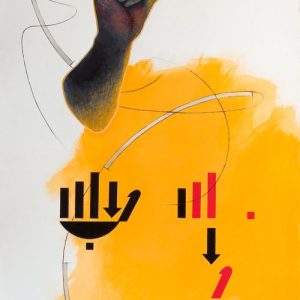
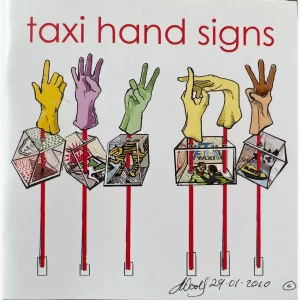
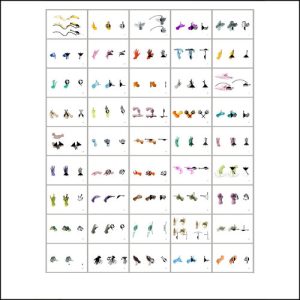
Woolf’s paintings of gloved hands, now a series of over fifty works, offer an inclusive visual system that transcends race, language, and class. Her research also revealed how widely people who are blind use taxi hand signs, inspiring her invention of a tactile shape language: fourteen simple graphic forms that can be felt, learned, and combined to communicate destinations without sight. This shape language is not an extension of Braille; rather, it stands as a completely new system of symbolic communication.
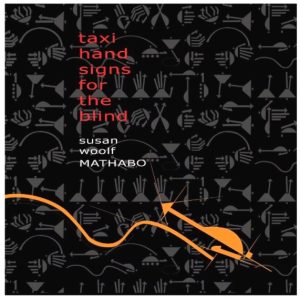
Her groundbreaking documentation led to the publication of Taxi Hand Signs for the Blind (2009), launched at Museum Africa, and later informed her doctoral studies in Art and Anthropology at the University of the Witwatersrand. The significance of her work earned national recognition when the South African Post Office selected both the hand-sign paintings and the tactile signs for its 2010 National Commemorative Stamp series.
Woolf’s investigations into signification, perception, and the experience of “the other” have been exhibited internationally. Highlights include the Museum of Modern Art (MoMA), New York, where her tactile sign language formed part of the exhibition Talk to Me (2011); the Wits Art Museum (2013); and the South African Jewish Museum (2016), where multi-layered installations invited sighted visitors to navigate space as people who are blind do — through touch, memory, and guided experience.
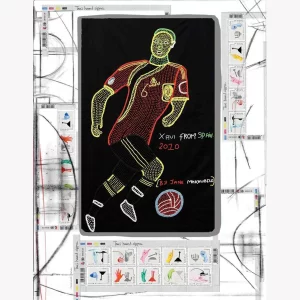
Her work spans paintings, tactile forms, sculptural installations, films, and large-scale murals, all unified by an exploration of language, coded communication, and the subtle dynamics of seeing and being seen. Woolf’s art both documents and honours the informal commuter language that shapes daily life in South Africa, elevating taxi hand signs from overlooked gestures to recognised cultural heritage.
Today, Susan Woolf stands as the foremost visual archivist of this uniquely South African phenomenon — an artist whose practice bridges communities, challenges perception, and preserves a living history through art.